The Treadmill Is a Coat Rack: What Your Home Says Behind Your Back
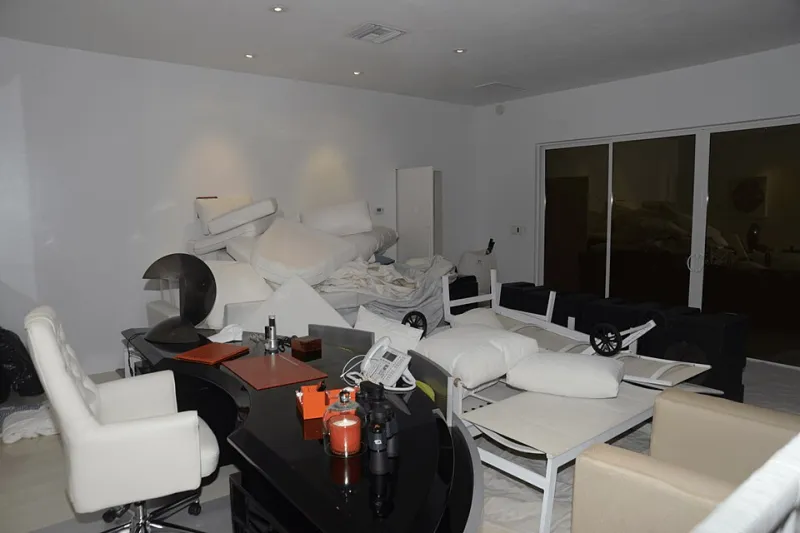
Photo: Federal Bureau of Investigation, Public domain, via Wikimedia Commons
Walk into your living room and look around like a stranger. What would they think you care about? What would they think you are avoiding? What would they assume you are still planning to become?
Most of us think of home decor as taste. A couch is a couch. A shelf is a shelf. But our spaces are also scripts. They tell stories about identity, aspiration, and unfinished business — often without our permission. The treadmill holding a pile of winter coats is not just clutter. It is a small monument to a version of yourself you have not quite become.
That is not a reason to feel bad. It is a reason to look closer. Your home is a draft, not a verdict.
The Treadmill That Became a Coat Rack
This is the classic American home plot twist. Someone bought the treadmill with real hope. Maybe it was January. Maybe it was a birthday. Maybe it was the year they decided to become a morning person. Then life happened, the coats needed a place, and the machine became furniture.
The treadmill is not really about exercise. It is about the gap between intention and routine. It says: I want to be someone who moves. It also says: I have not built the conditions for that yet. The machine is doing double duty as a goal and a guilt rack.
You can keep it. You can move it. You can sell it. But the first step is noticing what story it is telling. If the story is no longer true, you are allowed to change the set.
The Bookshelf of Unread Books
A shelf full of unread books is one of the most flattering lies in the house. It says: I am curious. I am intellectual. I am the kind of person who reads on Sunday mornings with coffee nearby. Sometimes that is true. Sometimes the books are just a vision board for a life with more time and quiet.
There is nothing wrong with aspirational books. But when every shelf is packed with should-reads, the room starts to feel like homework. The story shifts from curiosity to obligation. A better edit might be to keep the books you genuinely want to read next and move the rest. Your home does not have to be a library of your best intentions.
The Dining Table That Is Actually an Office
Since remote and hybrid work settled into American life, the dining table has become a conference room, a lunch counter, a craft station, and a pile of mail. The object has not changed. Its story has.
If your table is always covered in laptops and unopened envelopes, the room may be saying that work never fully leaves. That is not just a design problem. It is a boundary problem. You may need a literal ritual — a tray, a drawer, a five-minute reset — to tell your brain that the table is a table again.
The Entryway as a First Draft
The entryway tells the most honest story in the house because it is where real life dumps its pockets. Shoes, keys, packages, dog leashes, backpacks, mail. If the entryway is chaos, the story is usually about transition. You come home tired and your stuff lands wherever it lands.
A small fix here can change the whole mood. A bowl for keys. A hook for bags. A basket for shoes. You are not aiming for a magazine spread. You are writing a clearer opening scene: this is where the day ends and the evening begins.
What Layout Says Without Words
Furniture arrangement is a quiet argument about priorities. A couch facing the TV says entertainment is the center of gravity. A chair turned toward a window says rest and daylight matter. A giant sectional with no clear path says the room is for collapsing, not connecting.
None of these are wrong. But they are choices. If you want more conversation, you may need to move a chair. If you want less screen time, you may need to make the TV less central. The room will keep telling the old story until you change the blocking.
How to Edit the Story on Purpose
You do not need a full renovation. You need a sharper edit. Try this simple audit:
- Stand in the doorway and describe the room in one sentence. What is the main story it tells right now?
- Pick three objects that no longer match the life you actually live. Ask whether they are there for use, memory, or guilt.
- Choose one small change that supports the story you want. Clear the treadmill. Move the unread books. Put a basket by the door. Open a path to the window.
- Live with it for a week. Notice how the room feels, not just how it looks.
The goal is not a perfect home. It is a home that stops telling a story you never meant to write. Your living room can hold ambition and rest and mess. It just should not hold a costume for a person you have already decided not to be.