When the Life You Built Starts Feeling Like Someone Else's
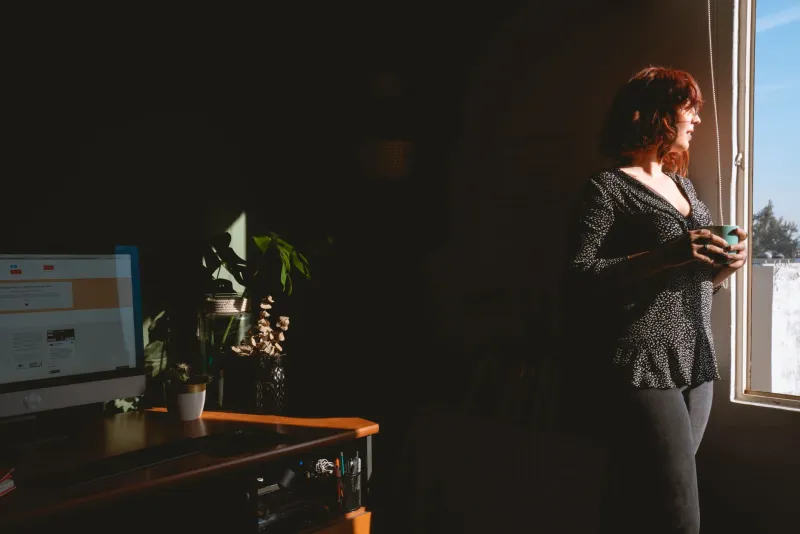
Something is off. You can't quite name it. Nothing dramatic has happened. Nobody left, nobody died, you didn't lose your job. By most reasonable measures, your life is fine — maybe even good. But there's this persistent, low-grade unease that follows you around. Like wearing shoes that fit perfectly last year and now pinch in a way you can't ignore.
If you've felt this, you've probably also felt guilty about it. Because what kind of person is uncomfortable with a perfectly decent life? The answer, it turns out, is a person who's growing. And that's actually worth paying attention to.
The Myth of the Permanent Comfort Zone
We talk about comfort zones like they're fixed addresses — places you either live in or have the courage to leave. But that's not quite how they work. Comfort zones shift. They expand and contract based on who you are at any given point in your life, and who you are keeps changing whether you ask it to or not.
The version of you who set up your current life — the job you took, the city you settled in, the habits you built, the relationships you maintained — made those choices based on what made sense at the time. That's not a criticism. That's just how life works. You make decisions with the person you are, not the person you haven't become yet.
But here's the thing: you've been becoming someone new this whole time. Quietly, incrementally, without a formal announcement. And at some point, the life that fit the old version of you starts to feel a little like wearing someone else's clothes.
Discomfort as Data, Not Dysfunction
American culture has a complicated relationship with discomfort. We're pretty good at treating it as a problem to be solved — something to medicate, distract from, or optimize away. But discomfort with your own status quo is a specific kind of signal that deserves a different response.
It's not telling you something is broken. It's telling you something has changed. Specifically, it's telling you that you have changed — and your external life hasn't caught up yet.
Think of it like a GPS recalculating. You've moved. The old route doesn't apply anymore. The discomfort is just the system trying to get your attention before you drive another five miles in the wrong direction.
The people who ignore that signal don't avoid the discomfort. They just delay it, usually until it becomes louder and harder to ignore — a midlife crisis, a sudden urge to blow up a perfectly functional relationship, a career pivot that looks impulsive from the outside but makes complete sense once you understand how long the pressure had been building.
What Outgrowing Something Actually Looks Like
It rarely looks like the movies. There's no single dramatic moment of clarity, no thunderclap of revelation. It tends to look more like a slow accumulation of small, nagging feelings.
You find yourself bored by conversations that used to energize you. You feel a low-level dread about things you used to look forward to. You notice a persistent pull toward something you can't fully articulate yet — a vague "more" or "different" that doesn't come with a clear destination attached.
Sometimes it shows up as irritability. You're annoyed by things that shouldn't bother you this much, because the real frustration isn't with those things — it's with the stuckness you can sense but haven't named.
None of this means your life is bad. It means you're bumping up against its edges in a new way. That's actually a sign of development, not failure.
The Awkward Middle Is Part of the Process
Here's the part nobody loves to hear: the gap between outgrowing something and knowing what comes next can be genuinely uncomfortable for a while. There's no clean transition. You're not who you were, but you're not yet who you're becoming. That in-between space is disorienting.
Resisting it doesn't make it shorter. In fact, the more energy you put into convincing yourself that nothing needs to change, the longer you tend to live in that uncomfortable limbo. The life that doesn't fit doesn't get more comfortable just because you decide to stop noticing the pinch.
What actually helps is giving yourself permission to acknowledge the feeling without immediately demanding a solution. You don't have to quit your job or move to a new city or blow up your routine tomorrow. You just have to stop pretending the discomfort isn't there.
From that honest starting point, things tend to clarify on their own timeline. The next step usually becomes visible once you admit you're ready to take it.
Staying Curious Instead of Panicking
The most useful thing you can do when your life starts feeling like it doesn't quite fit is to get curious about it rather than anxious. Anxiety asks, What's wrong with me? Curiosity asks, What's changed, and what might that mean?
Those two questions lead to very different places.
You're allowed to want more, or different, or something you don't have a word for yet. You're allowed to have outgrown something you built with love and intention. Growth doesn't require a villain, and change doesn't require a crisis.
Sometimes the most honest thing you can do is simply acknowledge that the life that fit you perfectly five years ago is starting to drift. And then get interested — genuinely, openly interested — in where the current is taking you next.