That Person From 10th Grade Is Living in Your Head Rent-Free — Here's Why

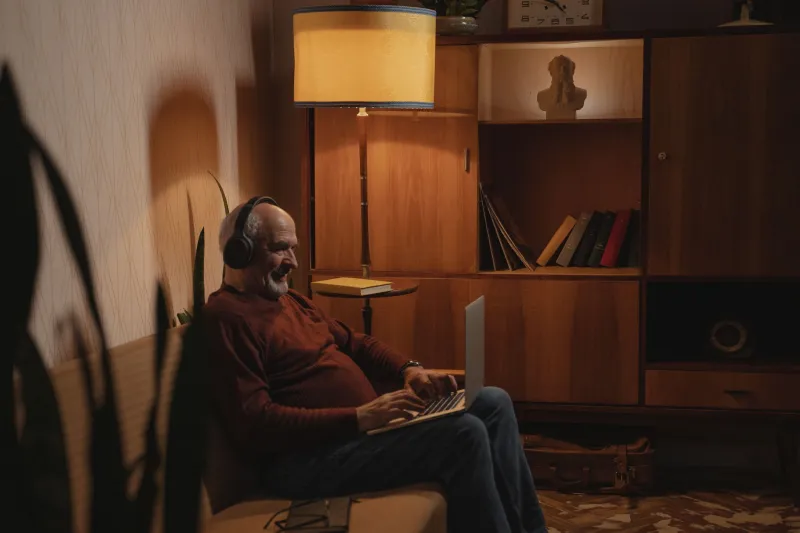
It usually starts small. You're scrolling through Instagram on a Tuesday night, half-watching something on Netflix, and there they are. Your old best friend from high school — the one you drifted from after graduation, the one you haven't actually talked to in maybe a decade. You tap their profile. You scroll back three years without fully meaning to. Suddenly it's midnight and you know their dog's name, the city they moved to, and whether their relationship looks happy.
You close the app feeling vaguely weird about the whole thing.
So what just happened? And more importantly — what does it say about you?
The Algorithm Didn't Do This Alone
It's tempting to blame the feed. Social media platforms are famously good at surfacing people from your past at oddly specific moments — a mutual friend's comment, a tagged photo, a location you both once shared. The technology is real, and it's designed to keep you engaged by triggering exactly this kind of emotional curiosity.
But here's the thing: the algorithm can dangle someone in front of you all it wants. You're the one who clicks.
Psychologists who study nostalgia and social comparison point out that we don't randomly fixate on people from our past. We fixate on specific people during specific seasons of our own lives. The high school best friend you suddenly can't stop checking in on isn't just a person — they're a mirror. And right now, for whatever reason, you need to look into it.
What You're Actually Searching For
Think about the last time you found yourself deep in someone's profile — someone you used to be close to but no longer are. Chances are, something in your own life was in flux. A career that felt stalled. A relationship that had gone quiet. A birthday that hit harder than expected. A move to a new city where you hadn't quite found your people yet.
We tend to revisit the past when the present feels uncertain. It's a psychological comfort mechanism — a way of reorienting ourselves by returning to a version of our lives that felt more defined. Back then, you knew who you were. You had a best friend who got you. The future was still wide open in a way that felt exciting rather than overwhelming.
Looking at that person's life now is, in part, a way of asking: Did I go the right way?
The Comparison Trap (And Why It's More Complicated Than You Think)
Social comparison is one of the most deeply human impulses there is. Psychologist Leon Festinger first described it in the 1950s — the idea that we evaluate our own circumstances by measuring them against others. Social media didn't invent this. It just gave us an infinitely scrollable arena to do it in.
When you check in on an old friend, you're almost certainly comparing. But the comparison isn't always as straightforward as "their life looks better than mine." Sometimes it's the opposite — you're looking for evidence that you made the right choices. Sometimes it's wistful, not envious. You miss who you were when you were close to them, more than you actually want their life.
And sometimes — if you're honest — it's a little of everything at once.
The tricky part is that social media profiles are, by design, curated highlights. You're comparing your full, complicated, behind-the-scenes reality to their edited reel. The kitchen that looks beautiful in a photo might be the one thing holding together a life that's otherwise quietly falling apart. You genuinely can't know. And yet the brain processes those images as if they're data.
When It's About Transitions, Not Dissatisfaction
Not every deep-dive into someone's old profile is a sign of unhappiness with your own life. Sometimes it's simply about transition.
Researchers who study life stages have noted that people naturally look backward during major threshold moments — turning 30, getting married, having a first child, losing a parent, changing careers. These moments prompt reflection, and reflection often pulls us toward the people who were present during earlier versions of ourselves.
Your high school best friend represents a whole chapter of your identity — one that existed before adult responsibilities started narrowing your options. Revisiting them, even silently and from a distance, can be a way of honoring that chapter. Of acknowledging the person you were before the drift happened.
There's nothing pathological about that. It's actually pretty human.
The Question Worth Sitting With
Here's where it gets interesting: what you're drawn to in their life often points directly at what's missing — or what you're quietly longing for — in yours.
If you keep pausing on photos of their friend group, maybe you're craving deeper connection. If it's their career pivot that keeps catching your eye, maybe there's something you've been too afraid to pursue. If it's just that they seem content in a low-key, unflashy way, maybe the hustle-and-optimize culture you've bought into isn't actually making you happy.
The obsession, when you look at it clearly, is less about them and more about a feeling you're chasing. They just happen to be the face you've attached it to.
Should You Actually Reach Out?
This is the question everyone eventually arrives at after enough late-night profile scrolling. And the honest answer is: sometimes yes, sometimes no, and only you can tell the difference.
Reaching out from a place of genuine warmth — I saw you moved to Austin, I've always wanted to visit, hope you're well — can occasionally rekindle something real. Adult friendships are harder to build than people expect, and reconnecting with someone who already knows your whole backstory has a certain ease to it.
But reaching out because you're lonely, or because you want to measure yourself against them up close, or because you're hoping they'll validate a choice you made — that's a different situation. It's worth being honest with yourself about which one it is before you hit send.
The Real Takeaway
The next time you find yourself three years deep into someone's Instagram at 11 p.m., try pausing before you close the app in a fog of vague guilt. Ask yourself what, specifically, caught your attention. What feeling did it stir up? What does that feeling tell you about where you are right now?
The algorithm surfaced that person. But you stayed. And that's the part that's actually worth paying attention to.
Your fascination with someone else's life is almost always, underneath it all, a message about your own. The drift you feel when you close the app? That's not about them. It's a clue — one that's pointing somewhere much closer to home.