Your Repeat Songs Aren't Just Nostalgia — They're a Portrait of Who You're Turning Into
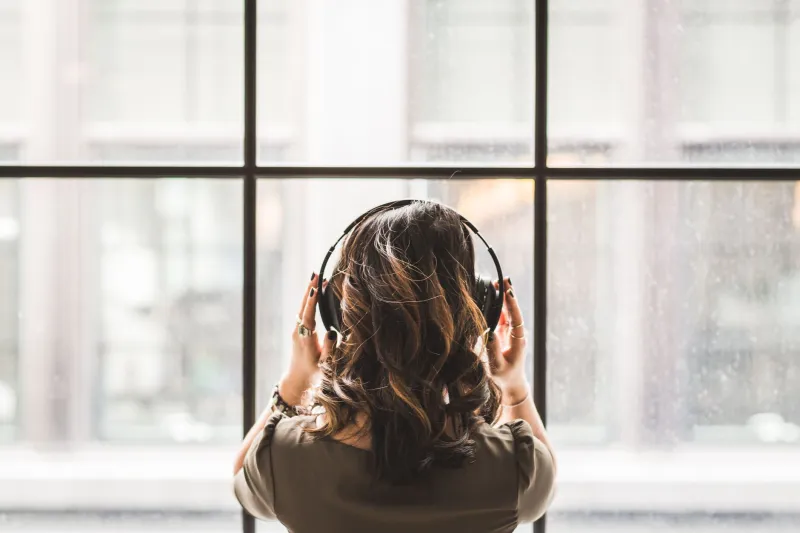
There's probably a playlist somewhere on your phone — maybe buried in Spotify, maybe a burned CD you still somehow have — that you return to more than you'd admit in polite company. A handful of songs that just get it, whatever "it" happens to be on any given Tuesday. You don't always know why they hit differently. You just know they do.
Here's the thing: that's not random. The music we obsessively return to isn't just background noise or comfort food for the ears. It's functioning as something closer to a living journal — one you've been writing without ever picking up a pen.
Why Certain Songs Become Emotional Anchors
Psychologists have studied music's grip on us for decades, and one thing keeps coming up: songs don't just trigger memories, they store emotional states. When you first heard that one track during a specific chapter of your life — a breakup, a cross-country move, a summer that felt like it would never end — your brain essentially bookmarked the feeling alongside the melody. Every time you return to it, you're not just remembering. You're re-accessing.
This is partly why certain songs feel almost physically comforting. They're not reminding you of who you were — they're giving you temporary residence back inside a version of yourself that still felt something intensely. In a culture that tends to reward moving on and leveling up, that's not nothing. Sometimes you need to visit the old neighborhood of your own emotional history.
But here's where it gets more interesting: the songs you keep returning to aren't always tied to specific memories. Sometimes they just match something you're carrying right now. A low-grade anxiety. A restlessness you can't name. A quiet hope you haven't told anyone about yet. The music meets you there, and that's why you keep pressing play.
What Changing Taste Actually Signals
Most of us have experienced that moment of mild identity crisis when we realize we can't stand something we used to love. The album that defined your entire junior year of high school now feels embarrassing, or at least foreign. Meanwhile, you've somehow developed strong opinions about music you would have dismissed entirely five years ago.
This isn't just about taste maturing or getting older. Research in personality psychology suggests that our musical preferences shift meaningfully when we're in the middle of significant internal change — even before we consciously recognize that change is happening. People going through major life transitions, questioning long-held beliefs, or quietly renegotiating their values often report that their music habits shift at the same time.
Think of it like this: your playlist is updating its operating system. The songs that used to resonate don't fit the current architecture anymore. New ones do. Your ears know something your conscious mind is still catching up to.
If you've recently found yourself gravitating toward music that feels completely unlike your "usual" taste, it might be worth sitting with the question of what's actually shifting beneath the surface. Not in a dramatic, journal-prompt kind of way — just noticing.
The Soundtrack as Personal Narrative
Here's an exercise that sounds simple but lands differently than you'd expect: scroll back through your most-played songs over the last three or four years. Spotify Wrapped gives you a slice of this, but you can also just trust your memory. What were you listening to obsessively during different chapters?
For a lot of people, this exercise reads like a map. The angry, distorted stuff from the year things fell apart. The quieter, more acoustic phase when you were rebuilding. The upbeat, almost aggressively optimistic playlist from when you were trying to convince yourself things were fine. The unexpectedly melancholic turn that came out of nowhere but somehow made everything feel more honest.
Without meaning to, most of us have been curating a narrative. The songs we choose — especially the ones we return to over and over — reflect the story we're living through. They also reflect the story we want to be living. Music is one of the few places people let themselves want things they haven't said out loud yet.
That's not a small thing in a world that tends to demand clarity and intention. Your playlist might be the most honest account you have of who you actually are versus who you're presenting yourself to be.
The Songs You Skip Over Tell a Story Too
It's not just what you play — it's what you can't bring yourself to play anymore. Most people have at least one song they've effectively retired, not because it's bad but because it carries too much weight. Hitting play would mean feeling something they're not ready to feel, or revisiting a version of themselves they've worked hard to move past.
Those skipped songs are data points too. They mark the edges of where you've been. In some cases, the inability to listen to something without flinching is a sign that the emotional work around that period isn't quite finished. In other cases, the distance you've created is actually healthy — proof that you've genuinely moved through something rather than just moving away from it.
The difference tends to show up in the body. One kind of skip feels like avoidance. The other feels like completion.
What You're Actually Building
The musical life most people live — the playlists, the phases, the inexplicable attachments to certain songs — is less about entertainment than it is about identity construction. We use music to figure out who we are. We use it to rehearse emotions we're not ready to express otherwise. We use it to stay connected to past versions of ourselves while also, quietly, auditioning future ones.
The artist you discovered last month who you can't stop listening to? There's a reason they found you now and not two years ago. Something in you was ready for whatever they're saying.
That playlist you've had on repeat isn't just a comfort habit. It's a running document of your inner life — updated in real time, whether you're paying attention or not. And if you actually sit down to read it, you might find out something about yourself you didn't know you already knew.
The music has been keeping notes. It might be time to check in on what it's written.