Bored in America: How Doing Nothing Became the Most Radical Thing You Can Do
Remember when being busy was a personality trait? When you'd ask someone how they were doing and they'd respond with "exhausted, honestly" like it was a badge of honor? For most of the 2010s, American culture ran on the fumes of hustle mythology. Sleep was for the weak. Downtime was wasted time. Your phone was always within arm's reach, loaded with podcasts and notifications and an infinite scroll designed to make sure you were never, ever bored.
Then something shifted. And boredom — genuine, unscheduled, screen-free boredom — started making a quiet comeback.
The Post-Pandemic Hangover Nobody Expected
The pandemic was supposed to slow us down. And in some ways, it did. But it also handed us unlimited streaming, Zoom happy hours, TikTok, sourdough tutorials, and a collective anxiety that made stillness feel unbearable. Many Americans responded by consuming more content than ever before, not less.
The crash came later. By 2022 and into 2023, therapists across the country began reporting something they hadn't seen much of before: patients who were exhausted not from doing too much, but from consuming too much. Doom-scrolling burnout. Podcast fatigue. The peculiar emptiness of having watched everything on Netflix and feeling worse for it.
That low-grade dissatisfaction turned out to be meaningful. It was the first signal that something in the cultural operating system was ready for an update.
What Boredom Actually Does to Your Brain
Here's the counterintuitive part: boredom isn't empty. When your brain isn't being fed external stimulation, it doesn't just go quiet. It activates what neuroscientists call the default mode network — a set of brain regions associated with mind-wandering, self-reflection, and what researchers describe as "constructive internal reflection."
In plain terms: boredom is when your brain gets to think for itself.
Studies out of the University of Central Lancashire found that participants who completed a boring task before a creative challenge significantly outperformed those who went straight into the creative work. The bored brain, it turns out, gets restless in productive ways. It starts connecting dots, imagining scenarios, and generating ideas that wouldn't surface in a brain that's constantly reacting to incoming stimulation.
This is why so many people report their best ideas coming in the shower, on a long drive, or during a run without headphones. Those are the last remaining boredom pockets in modern American life — and they're doing serious cognitive work.
The Workplace Is Starting to Notice
The cultural conversation around productivity has quietly begun to shift. The four-day workweek movement, which gained serious momentum in the US following successful trials in Iceland and the UK, isn't just about work-life balance. At its core, it's an argument that human beings need unstructured time to do their best structured work.
Some companies are going further. A growing number of tech firms and creative agencies have started carving out what they're calling "white space" — scheduled, unscheduled time where employees are explicitly asked not to attend meetings, check Slack, or tackle their to-do lists. The goal is to let boredom do its thing.
"We kept wondering why our best ideas were coming from hallway conversations and not brainstorming sessions," one creative director at a mid-sized marketing firm in Austin told a trade publication last year. "Eventually we realized: the hallway conversations happened when people had nothing else going on."
Social Media's Boredom Problem
The platforms that built empires on eliminating boredom are now facing a boredom-driven backlash. TikTok's hyper-personalized algorithm — arguably the most effective attention-capture machine ever built — has a well-documented flip side: users report feeling overstimulated, passively entertained rather than genuinely engaged, and oddly dissatisfied after long sessions.
The response has been interesting. A small but growing "digital minimalism" movement, popularized in part by Georgetown professor Cal Newport's writing, has attracted millions of Americans who are deliberately choosing lower-stimulation lives. Deleting apps. Buying dumb phones. Reinstating the boring commute without a podcast soundtrack.
Meanwhile, platforms themselves are scrambling to adapt. BeReal's brief cultural moment — the app that demanded spontaneous, unfiltered photos once a day — was partly a boredom correction. So is the resurgence of long-form newsletters, slow podcasts, and the surprising popularity of lo-fi study streams on YouTube, where the entire appeal is ambient, low-stakes background texture rather than active engagement.
Boredom as a Class Issue
It would be incomplete to celebrate boredom without acknowledging who actually has access to it. Choosing to be unstimulated is, in many ways, a privilege. Gig workers juggling three apps to make rent don't have the luxury of white space at work. Parents of young kids in a single-income household aren't scrolling TikTok out of philosophical indulgence — they're exhausted and grabbing five minutes of escape.
The boredom renaissance, at least in its current form, is largely a conversation happening among knowledge workers, college-educated millennials, and the wellness-adjacent corners of the internet. That's worth sitting with. Any cultural shift toward valuing stillness has to grapple with the structural conditions that make stillness inaccessible for so many Americans.
Learning to Tolerate the Quiet
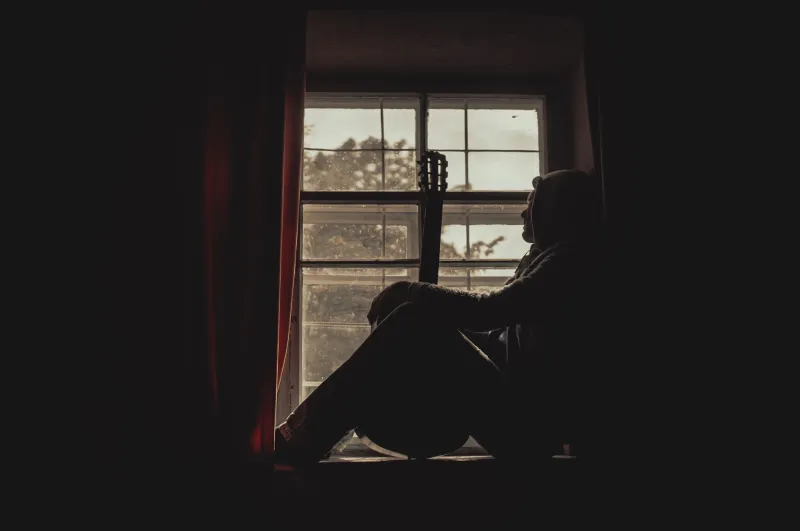
For those who do have the space to experiment, the re-entry into boredom can feel genuinely uncomfortable at first. That's expected. We've spent years training our brains to demand constant input. Sitting in a waiting room without reaching for your phone, taking a walk without earbuds, or simply staring out the window on a Sunday afternoon can produce a low-level anxiety that feels almost physical.
Psychologists suggest starting small. Ten minutes of intentional nothing. A meal eaten without a screen. A commute without audio. The discomfort tends to peak quickly and then give way to something that's harder to name but easier to recognize: a kind of mental loosening. The beginning of actual rest.
America built a culture on the premise that productivity is the highest virtue. Boredom is quietly challenging that assumption — not by being lazy, but by being necessary. The drift away from constant stimulation isn't a retreat. It might be the most forward-thinking thing we've done in years.